


Man-to-man
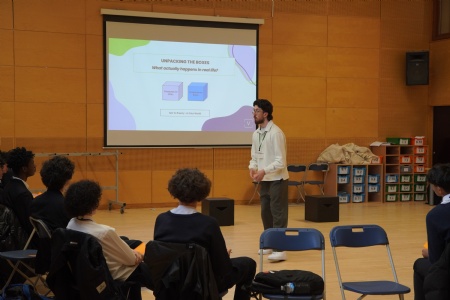
Year 10 boys have a frank discussion about masculinity
In recent years, the phrase ‘toxic masculinity’ has dominated the media in discussions about boys and young men and their outlook today. Broadly, this refers to a set of attitudes and behaviours typically associated with, or expected of, men, which has a negative impact on both them and wider society.
Voicebox is an organisation that challenges harmful male gender stereotypes, even avoiding using the term ‘toxic masculinity’ with its implication of what’s ‘wrong’ with the male population. Since 2018, through workshops and other projects, the company has worked with over 60,000 young people and 250-plus schools and other organisations to create non-judgemental spaces for youngsters to explore what it means to be a young man in the twenty-first century.
On Thursday 16th April 2026, Voicebox ran several sessions at Claremont High School for boys in Year 10. Mr West explains the rationale behind the day’s activity.
‘The workshop was in response to the burgeoning conversation about young boys and men being exposed to disinformation from the "Manosphere", which leads to the entrenchment of very harmful stereotypes and assumptions about life. While this work has been going on for decades, the way the manosphere has taken off in recent months on social media requires special attention, and this workshop was part of a wider approach from the PSHE Department at Claremont to ensure our boys embrace the British values of personal liberty and mutual respect for others.
‘With that in mind, the workshop asked Year 10 boys to consider what their actual beliefs, desires and opinions are, free from the aspect of social judgement. It asked them to imagine what a new boy to Claremont would have to do to fit in, and then critically reflect on whether they thought those expectations were fair or desirable. Finally, the boys had the opportunity to "re-write the script" by creating new expectations for themselves to move forward as a person trying to make our community a better place.’
The workshops clearly had an impact on the participants.
‘We explored ideas of what masculinity truly means, what fitting in really feels like,’ says Ali Alhemyari 10.10. ‘I learnt that being masculine is about being a positive role-model for others, being someone who can change the world. I’ll take away from the session the idea that fitting in isn’t the main thing - it’s about being yourself and becoming the best version of you.’
Antonio Pascuci 10.4 appreciated the discussion around masculinity and ‘social norms’ and realised that ‘being different isn’t bad’.
‘I learnt that masculinity isn’t just about being tough and hiding your emotions,’ adds Moctar Sangare 10.7. ‘There are many ways to be masculine and they are all accepted.’
Ultimately, Mr West believes it was a positive experience for all involved. ‘I hope the boys were able to reflect on the fact that as unique individuals, each of us has niche ideas and beliefs that not everyone would agree with - on the micro and macro level. Therefore, since we can't all fit the expectations of stereotypes, we should discard them and respect each other as individuals.’